
Mold assessment and the protocol your remediator follows.
Inspection, moisture mapping, sampling when it helps, and a written Mold Remediation Protocol that defines the work, containment and clearance criteria.

Seeing or smelling mold?
Leave your number and we call you back to talk through testing or remediation, one licensed role per project.
What an assessment includes.
Delivered in writing, with photos.
Inspect
Visible growth, water staining and building conditions.
Measure
Moisture meters, thermal imaging and humidity readings.
Sample
When it changes a decision, analyzed by an accredited lab.
Protocol
Areas, methods, containment, PPE and clearance criteria.
What goes in a Mold Remediation Protocol.
For regulated projects, the protocol identifies the rooms or areas where work will be done, estimates quantities of material to be cleaned or removed, specifies methods, containment and personal protection, and states the criteria for passing clearance. It must be provided to the client at least one day before remediation begins (TDLR).
Our protocols also note the suspected moisture source and recommend how to verify it was corrected, because the final certificate states whether the underlying cause was addressed.
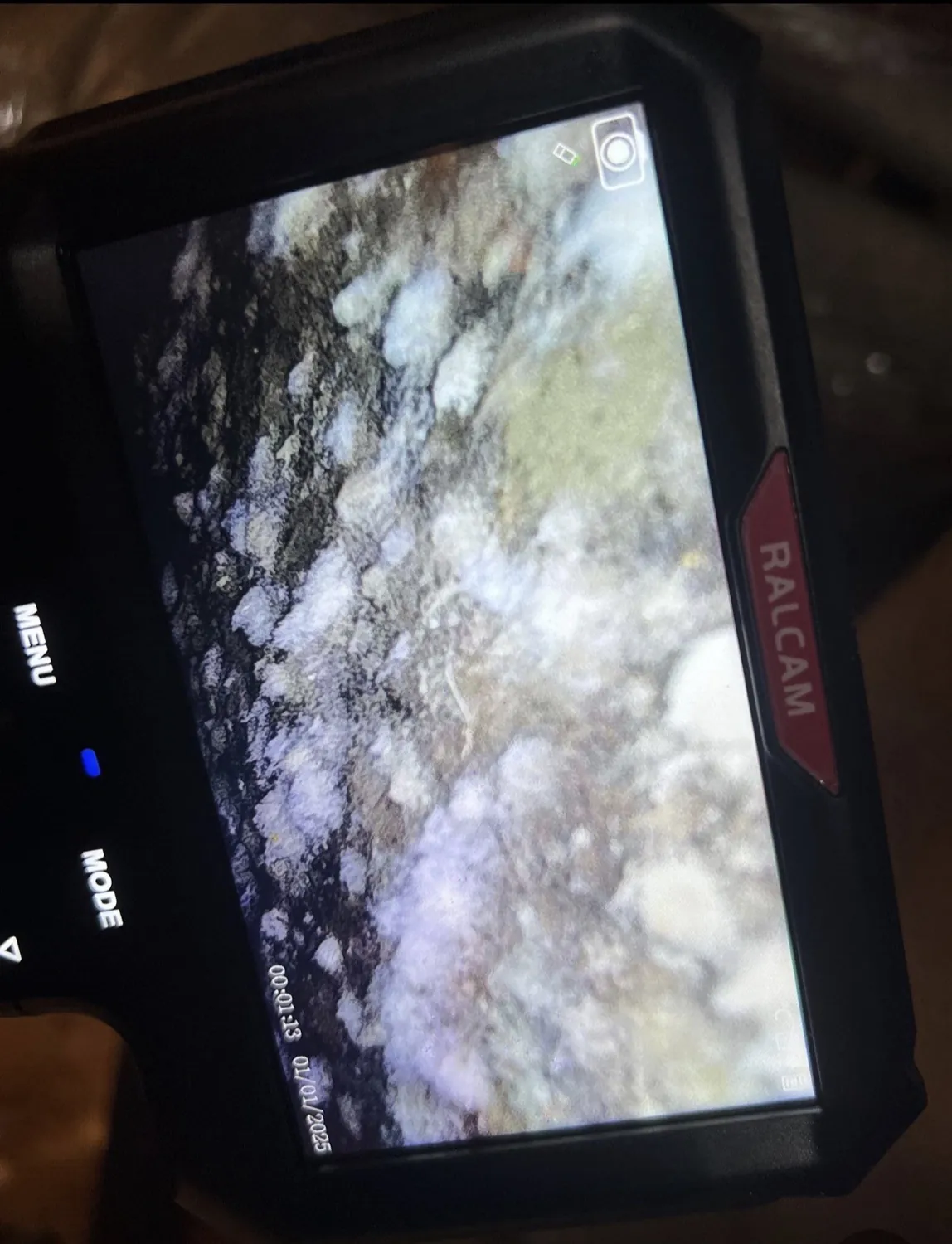
Assessment documentation.
Sampling and photo documentation support the written protocol.


How a regulated mold project works.
Summarized from TDLR guidance. Exemptions and details apply; the rules in 16 TAC Chapter 78 control.
| Step | Requirement |
|---|---|
| Threshold | Licensed assessment and remediation generally required for 25 contiguous square feet or more of visible mold |
| Protocol | Licensed assessor prepares a written protocol and gives it to the client at least 1 day before remediation starts |
| Work plan | Licensed remediator prepares a work plan and gives it to the client at least 1 day before starting |
| Notification | Remediator notifies TDLR online at least 5 days before starting ($25 fee); emergencies may notify by the next working day |
| Clearance | Post-remediation assessment by a licensed assessor independent of the remediator |
| Certificate | Certificate of Mold Damage Remediation (TDI form MDR-1) within 10 days of passed clearance; states whether the underlying cause was corrected |
| Exemptions | Include owners working on their own one- or two-family home and certain small residential properties; licensed remediators must still follow the rules even under 25 square feet |
Sources: TDLR at a glance; TDLR notifications; TDLR Consumer Mold Information Sheet; TDLR FAQ.
Flat-Out holds both a TDLR Mold Assessment Consultant license (MAC2142) and a Mold Remediation Contractor license (MRC2169). Under Texas Occupations Code §1958.155, a license holder may not perform both the mold assessment and the mold remediation on the same project. On every project we serve in one role only. If we assess, an independent licensed contractor remediates; if we remediate, an independent licensed consultant assesses and clears.
Regulated by the Texas Department of Licensing and Regulation, P.O. Box 12157, Austin, Texas 78711, 1-800-803-9202, 512-463-6599, www.tdlr.texas.gov.
Rated 4.9 on Google.
Real reviews from Houston homeowners and property owners. Read every review on Google or see more on our reviews page.
“Needed a plumber for a water leak emergency. Keith and his crew were here within 45 mins from calling. They met with the adjuster and had our home back to perfect within 2 months.”— Alex A., Yahoo Local review
“Keith is the owner, he is friendly, professional. Very detail-oriented. He makes sure everything is done correctly.”— Pam G., Angi review
“Very impressed by Keith’s skills and experience. He was able to identify and fix my plumbing issues, and was very honest about what needed to be fixed now, and what could wait.”— Thor Oxnard, Google review
One call. Every trade. Any hour.
Plumbing, HVAC, water, fire, mold and building diagnostics — handled by one licensed Houston team since 2013.
Frequently asked.
Still unsure? Call (832) 904-9001 and talk to a licensed professional — not a call center.
Who chooses the remediator?
Does the protocol go to my insurance company?
Code, standard and agency references used on this page. Requirements change; confirm the edition your jurisdiction or carrier applies.
- TDLR: Mold Assessors & Remediators at a Glance
- TDLR: Mold Remediation Notifications
- TDLR: Consumer Mold Information Sheet
- TDLR: Mold Assessors and Remediators FAQs
- Texas Attorney General: Mold Remediation consumer guidance
- U.S. EPA: A Brief Guide to Mold, Moisture and Your Home
- U.S. EPA: Ten things you should know about mold