
Kitchen remodeling, from the slab up.
Kitchen remodels where the sink, gas, drains, venting and range hood are designed by the licensed plumber and HVAC contractor who also manages the cabinets, counters and finishes.

What a kitchen remodel can include.
We scope the whole room, then price each part in writing.
Layout changes
Moving the sink, adding an island sink or prep sink, or relocating appliances.
Gas piping
New or relocated range and cooktop lines, sized and pressure-tested.
Drains and venting
Island drains vented correctly, not with a shortcut that gurgles or traps sewer gas.
Water supply
New PEX-A supply lines, shutoffs, pot fillers, ice maker and filtration lines.
Range hood exhaust
Ducted to the outdoors at the right size, with makeup air where the code requires it.
Cabinets and finishes
Cabinets, counters, backsplash, flooring and lighting coordinated through one contract.

Moving a sink in a slab-on-grade house.
Most Houston homes are built on a slab, so moving a sink or adding an island usually means cutting a trench in the floor, extending the drain at the correct slope, and tying in to the existing line. We camera-inspect the existing drain first, because joining a new island line to a cast-iron or partially collapsed drain moves the problem rather than solving it.
After the trench is backfilled and the concrete is patched, the new drain is tested before flooring goes down.
- Camera inspection of the existing drain
- Correct slope and venting for island sinks
- Drain test before backfill
- Concrete patched and leveled for flooring
Range hood exhaust and makeup air.
A kitchen exhaust system has to move air outdoors, not into the attic. The 2021 International Residential Code sets a minimum kitchen exhaust capacity of 100 cubic feet per minute intermittent or 25 cubic feet per minute continuous (2021 IRC, Texas edition).
Large hoods need more attention. When a home has a fuel-burning appliance inside the air barrier that is not direct-vent and does not use mechanical draft venting, any exhaust system able to move more than 400 cubic feet per minute must be provided with makeup air at about the same rate (2021 IRC, Texas edition). Without it, a powerful hood can depressurize the house and pull combustion gases back down a water heater or furnace flue. Because we are BPI-certified, we can measure that pressure and test the appliances for spillage after the hood is installed.
- Hood ducted outdoors with a backdraft damper
- Duct size matched to the hood’s rating
- Makeup air evaluated for hoods over 400 CFM
- Combustion appliances tested after installation
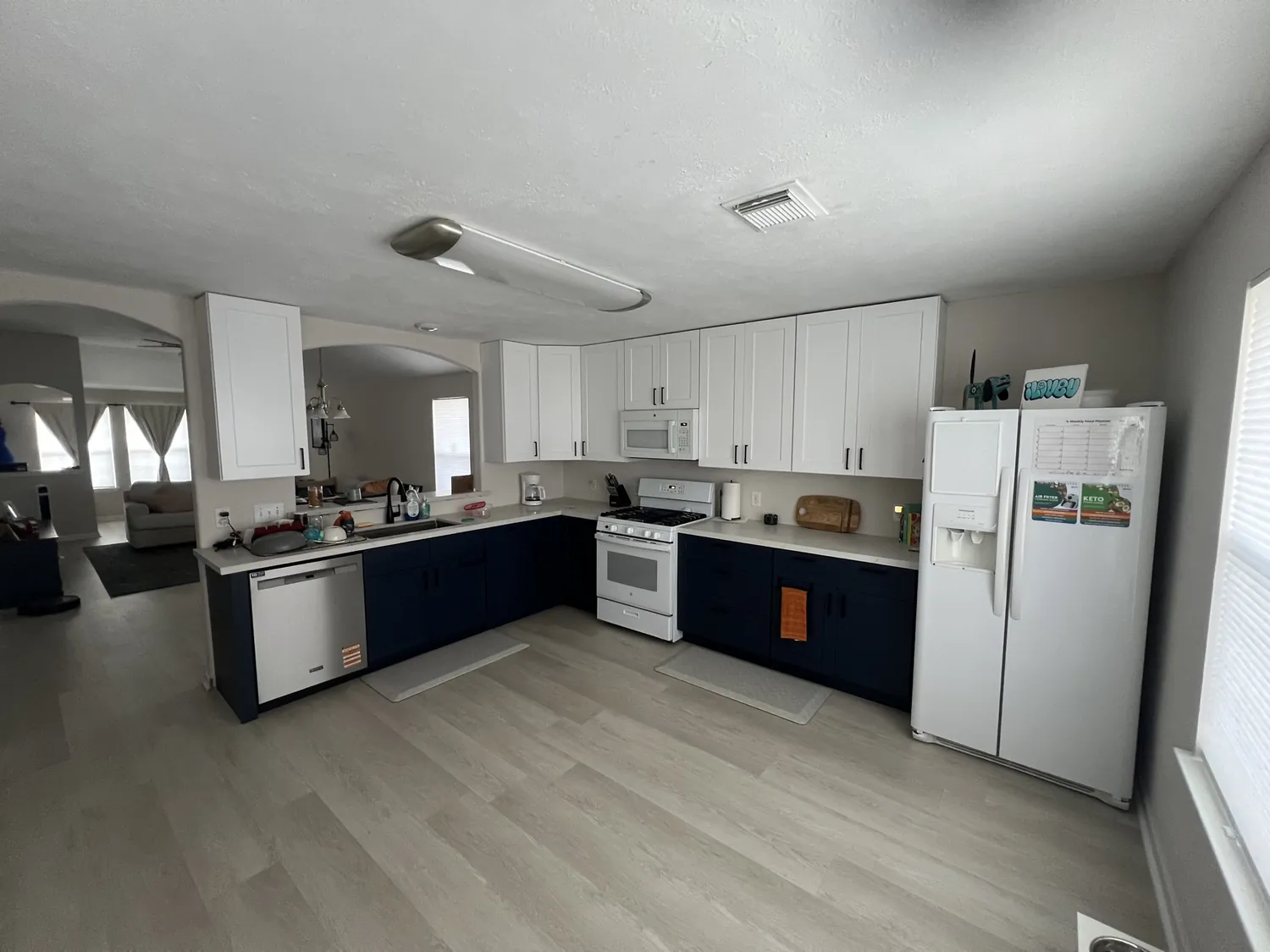
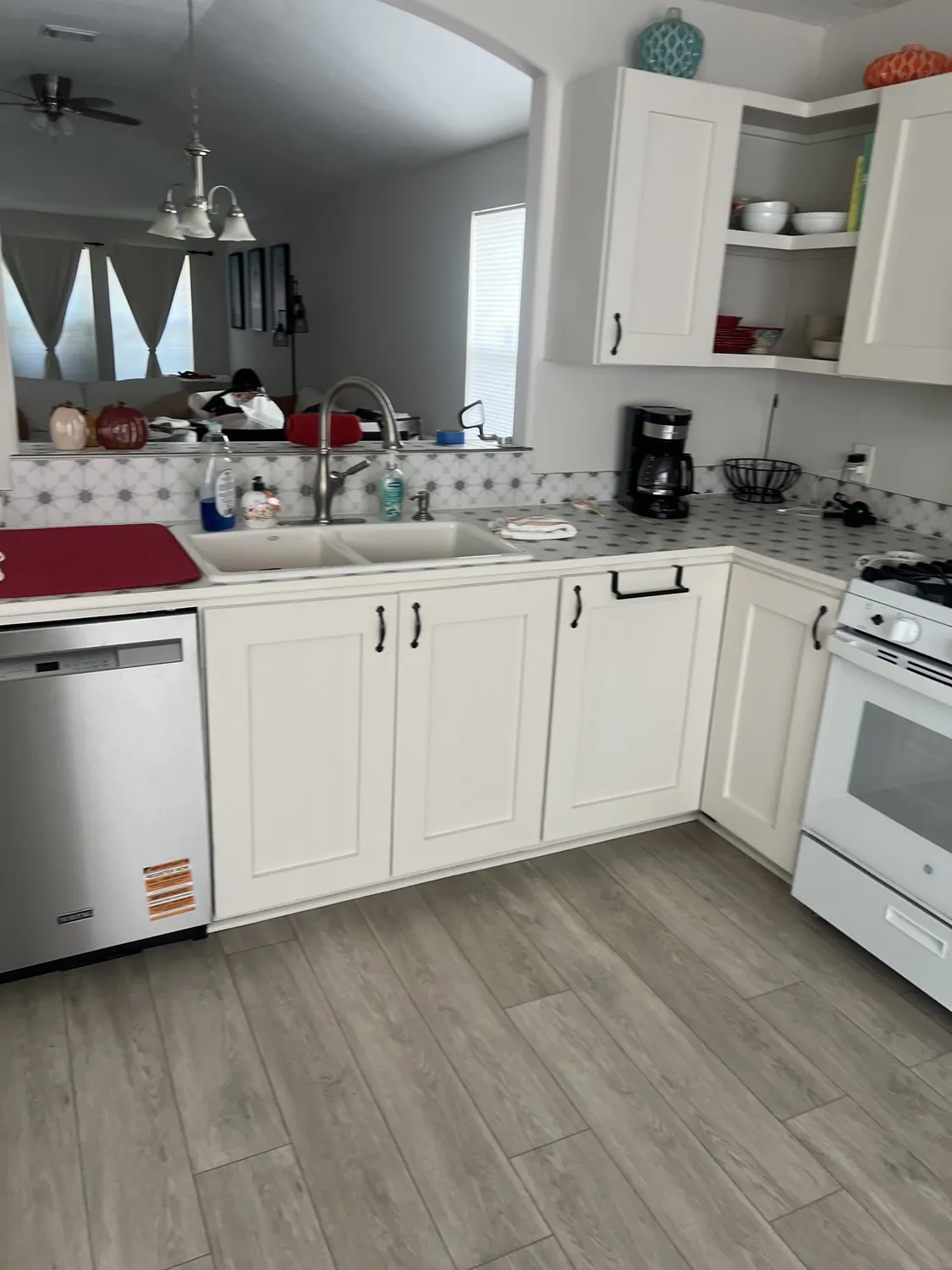
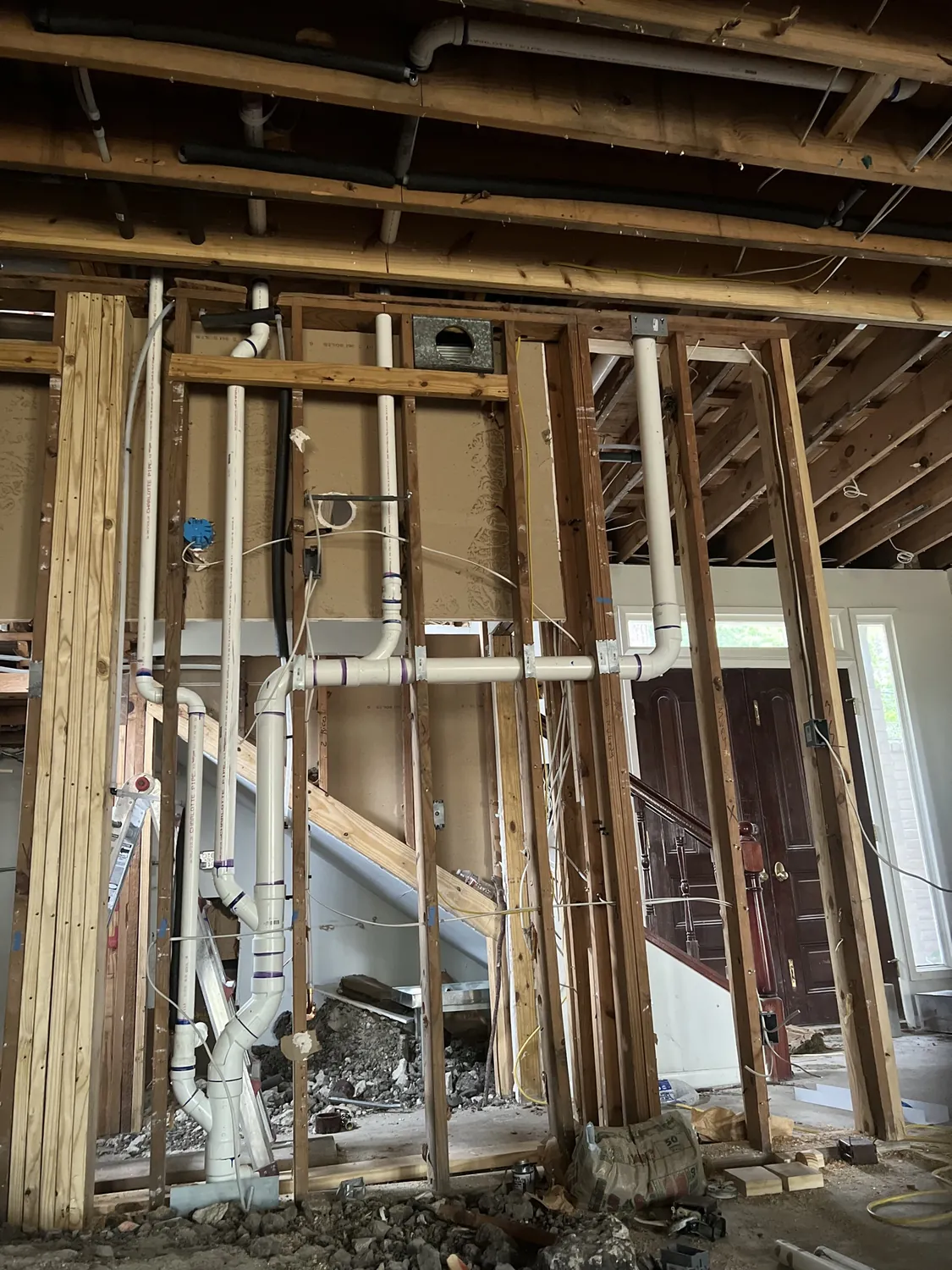
Kitchens we have remodeled and plumbed.
Photos from Flat-Out kitchen projects, finished rooms and the plumbing work underneath.



How a kitchen remodel runs.
Inspections happen before walls and floors are closed.
Measure and assess
Existing drains, gas, water, electrical capacity and moisture conditions checked.
Design and selections
Layout, cabinets, counters, fixtures and appliances chosen, with a written scope.
Permit
Drawings and permit submittal prepared.
Demolition and rough-in
Plumbing, gas, exhaust and electrical rough-in, then inspections.
Cabinets and counters
Cabinets set, counters templated and installed.
Trim-out and testing
Fixtures and appliances connected, gas tested, hood airflow checked, final inspection.
Texas does not issue a state general contractor license; the Governor’s licensing guide notes that general contractors may be subject to local requirements (Office of the Texas Governor). The trades are different: plumbing, air conditioning and electrical work each require a state license. Plumbing is performed under RMP Keith A. Lamb Jr., M-40630, and HVAC under TDLR TACLA153255E. Electrical work beyond plumbing and HVAC connections is performed through a TDLR-licensed electrical contractor, as state law requires (TDLR).
In Houston, a residential remodel permit requires plan review and inspections, and trade inspections must be scheduled by the registered licensed contractor for that trade (Houston Permitting Center).
Federal law requires paid renovation work that disturbs painted surfaces in pre-1978 homes to be performed by an EPA Lead-Safe Certified firm using lead-safe work practices. The rule applies once work disturbs more than 6 square feet of interior paint per room or 20 square feet of exterior paint, and it covers plumbers, electricians and HVAC contractors as well as remodelers (U.S. EPA). Tell us the year your home was built when you call, and we will confirm how the rule applies before any demolition starts.
Rated 4.9 on Google.
Real reviews from Houston homeowners and property owners. Read every review on Google or see more on our reviews page.
“Needed a plumber for a water leak emergency. Keith and his crew were here within 45 mins from calling. They met with the adjuster and had our home back to perfect within 2 months.”— Alex A., Yahoo Local review
“Keith is the owner, he is friendly, professional. Very detail-oriented. He makes sure everything is done correctly.”— Pam G., Angi review
“Very impressed by Keith’s skills and experience. He was able to identify and fix my plumbing issues, and was very honest about what needed to be fixed now, and what could wait.”— Thor Oxnard, Google review
Related services and guides
One call. Every trade. Any hour.
Plumbing, HVAC, water, fire, mold and building diagnostics — handled by one licensed Houston team since 2013.
Frequently asked.
Still unsure? Call (832) 904-9001 and talk to a licensed professional — not a call center.
Can you add an island sink on a slab?
Do I need makeup air for my range hood?
Do you install cabinets and counters?
Can you work around a leak or water damage under the old cabinets?
Code, standard and agency references used on this page. Requirements change; confirm the edition your jurisdiction or carrier applies.