
Mold testing and remediation in Spring Branch, for houses, rentals and small buildings.
Mold assessment and remediation across Spring Branch (77080, 77041, 77043, 77055), where houses and rental units sit side by side and the Texas rules depend on which one you own. Emergency calls are answered 24/7, under the TDLR mold licenses in the credential line above.
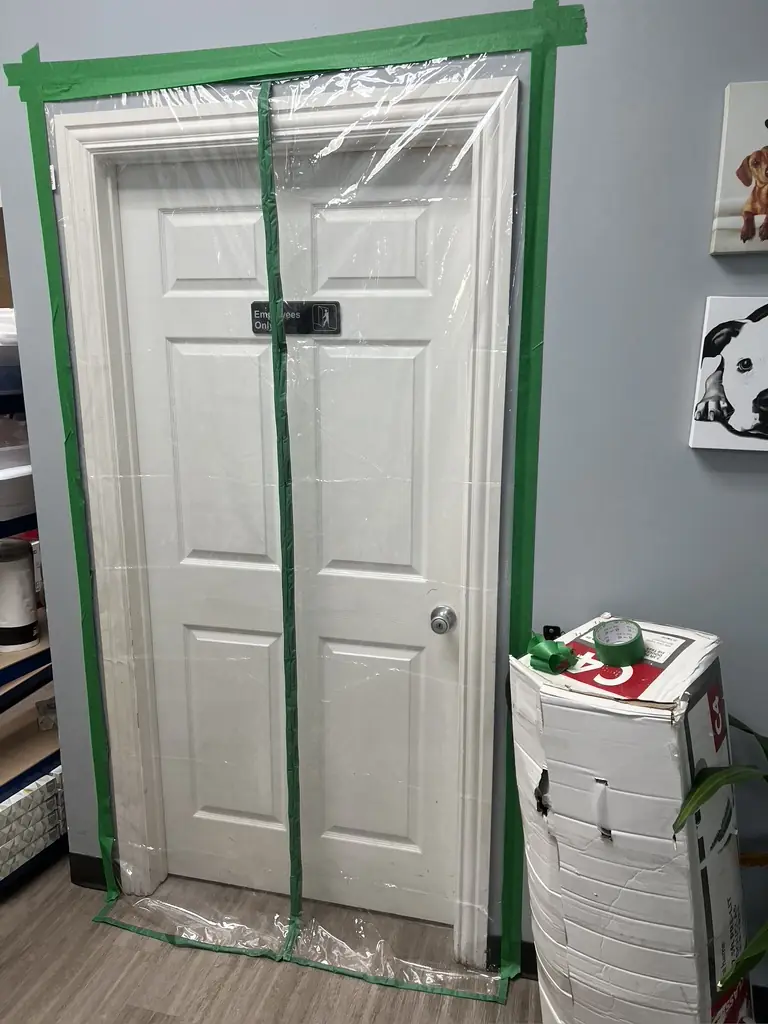
Seeing or smelling mold?
Leave your number and we call you back to talk through testing or remediation, one licensed role per project.
- The Spring Branch Management District’s plan counts 19,718 multi-family units and 18,262 single-family detached units in the district.
- TDLR says remediating 25 contiguous square feet or more of visible mold in a residential property with 10 or more units must be done by a licensed mold remediator.
- TDLR adds that certain exemptions apply to buildings with fewer than 10 rental units, including houses.
- TDLR says testing to learn what kind of mold is present is not required before remediation or cleaning.
- Many Spring Branch neighborhoods were developed in the 1970s and before, according to the district plan.
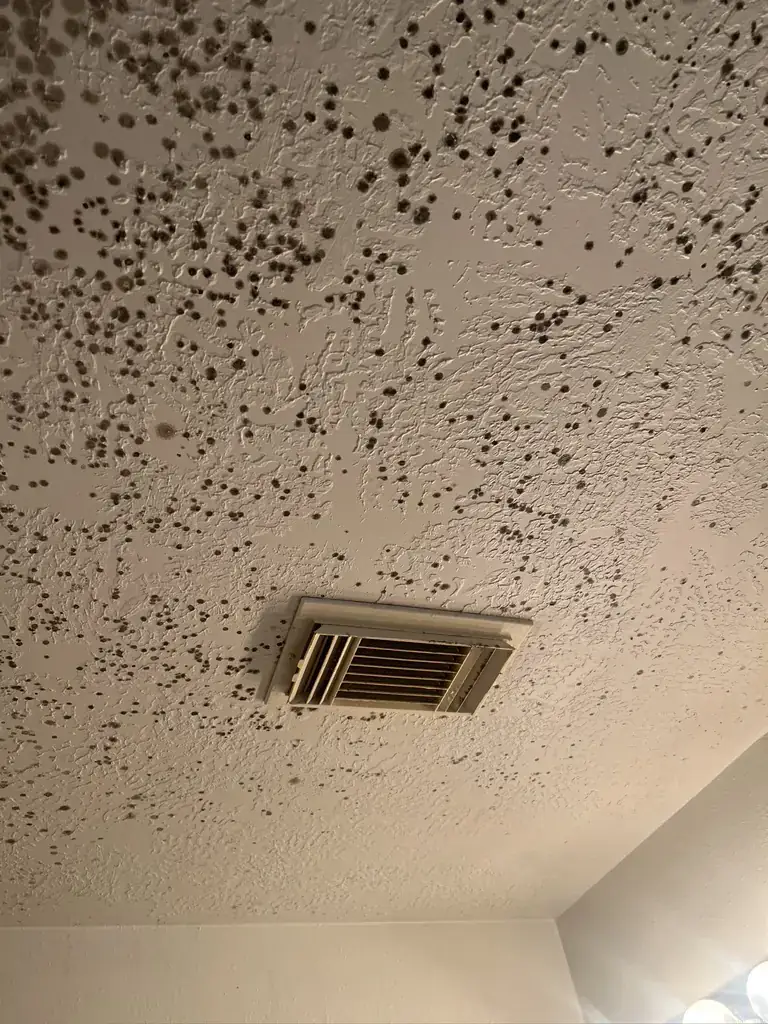
How does Texas treat mold in a Spring Branch building with ten or more units versus a single house?
TDLR’s rental guidance says remediating 25 contiguous square feet or more of visible mold in a residential property with 10 or more units must be done by a licensed mold remediator, while smaller areas can be cleaned by an owner or maintenance staff. It adds that certain exemptions apply to buildings with fewer than 10 rental units, including houses.
Spring Branch has both kinds. The district plan counts 19,718 multi-family units next to 18,262 single-family detached homes, so a call here can mean a rented house or a larger building, and who may do the work depends on which it is.
- Unit count and ownership confirmed before the job is scoped
- Visible area measured in contiguous square feet
- Consumer Mold Information Sheet delivered before work begins
What does an older Spring Branch neighborhood tell us about where to look for moisture?
The district plan says many neighborhoods were developed in the 1970s and before and are often over 40 years old, with greater infrastructure needs. EPA lists the usual sources of excess moisture indoors: leaking roofs, leaking or condensing water pipes inside walls, landscaping and gutters that send water toward a building, and humidity near 60 percent.
We work through that list in order. A source found on day one decides whether remediation is a single cleanup or the first of several visits.
Which moisture sources do we rule out first in a Spring Branch property?
The list follows EPA’s common moisture problems:
Roof leaks over the affected rooms
Traced after rain, then tied to the stain pattern on the ceiling.
Pipes leaking or sweating in walls
Pressure tested, and wall cavities checked where pipes run.
Water directed toward the foundation
Gutters, down spouts and grading checked for water that reaches the building.
Humidity that stays near 60 percent
Measured, because EPA lists it among the conditions that support mold growth.
Spring Branch housing mix and the TDLR rules that follow from it.
| Jurisdiction | Almost entirely within the City of Houston Source |
|---|---|
| ZIP codes | 77080, 77041, 77043 and 77055 Source |
| Housing mix | 18,262 single-family detached and 19,718 multi-family units, per a 2011 market study cited in the plan Source |
| Housing age | Many neighborhoods were developed in the 1970s and before Source |
| Multi-family condition | A number of multi-family residences are scattered through the district, many requiring substantial upgrade Source |
| Ten or more units | Visible mold of 25 contiguous square feet or more in a residential property with 10 or more units must be remediated by a licensed remediator Source |
| Smaller areas | Under 25 contiguous square feet can usually be cleaned by people who are not licensed; testing for mold type is not required first Source |
| Information sheet | The remediator provides the Consumer Mold Information Sheet to the client before any mold related activity begins Source |
| Notification | Required at 25 contiguous square feet or more when remediation will be conducted Source |
| ZIP code 77080 | 17,731 housing units; median home value $345,000 (ACS 2024 5-year) Source |
| Median home value, 77043 | $411,100 (ACS 2024 5-year, table B25077) Source |
| Drive from our shop | About 10 miles by road from 77076 |
Drive distances are approximate road miles from our shop ZIP.
Plumbing, drying and AC pages for Spring Branch properties.
Mold Testing
Air and surface sampling with lab results.
ExploreNo. 02Assessment
Licensed assessment and written protocol.
ExploreNo. 03Remediation
Containment, removal and HEPA cleaning.
ExploreNo. 04Clearance
Post-remediation verification.
ExploreNo. 05Attic Mold
Sheathing, ventilation and AC causes.
ExploreNo. 06HVAC & Duct Mold
Air handlers, registers and ducts.
ExploreRated 4.9 on Google.
Real reviews from Houston homeowners and property owners. Read every review on Google or see more on our reviews page.
“Needed a plumber for a water leak emergency. Keith and his crew were here within 45 mins from calling. They met with the adjuster and had our home back to perfect within 2 months.”— Alex A., Yahoo Local review
“Keith is the owner, he is friendly, professional. Very detail-oriented. He makes sure everything is done correctly.”— Pam G., Angi review
“Very impressed by Keith’s skills and experience. He was able to identify and fix my plumbing issues, and was very honest about what needed to be fixed now, and what could wait.”— Thor Oxnard, Google review
Related services and guides
Mold in a Spring Branch rental or house?
Phone (832) 904-9001 and tell us how many units the building has; that number decides which Texas rule applies. The line is open at all hours.
Who may handle mold in Spring Branch, house or building?
Can an owner clean mold in a rented house in Spring Branch?
Is a lab test required before mold is removed?
What must a remediator hand over before starting?
What if the building has ten or more units?
Agency and public-record references used on this page. Requirements change; confirm with the office named above.